STORY
Hadacol Tremblers – Biography
First Years
The Hadacol Tremblers grew out of a shared fascination for early American western swing. Somewhere around 2015, guitarist-vocalist Steven – long active in Belgian roots outfits like Truck Stop Cutie, Acadian Ramblers, Motel Men, Sebi Lee and The Cowboy Angels – crossed paths with Kris, whose background in folk, fiddle traditions and American roots had taken him through bands such as Frozen Fish, ’56 Slapback and the Zeeland-based The Blue Clay. They quickly discovered a mutual love for the dancehall sound of Texas and Oklahoma from the 1930s and ’40s, and started experimenting with the repertoire.
Their first rehearsals, together with original bass player Ron, led to a trio built around guitar, vocals, fiddle and upright bass. But western swing really comes alive when the instrumentation widens. The sound began to blossom when Jurgen joined – originally a guitarist steeped in rock ’n’ roll, rockabilly and hillbilly – and gradually brought tenor banjo and lap steel into the mix. This opened up new possibilities and helped shape the early character of the band.
The Hadacol Tremblers’ first public show took place at Cowboy-Up in Waardamme, a staple venue in the Belgian country and western scene. It marked the start of a steady run. Over the following years, the band played their way through cafés, clubs and smaller halls across Belgium, the Netherlands and northern France, gradually growing into the rhythm, timing and tight ensemble work that western swing thrives on.
The line-up settled into its long-term shape when Kurt stepped in on upright bass. Active in the roots scene since his teens, he’d built a solid reputation through his work with Boogie Phil & The Wise Guys, Shakedown Tim & The Rhythm Revue, The Swampboys and Scotch No Soda. With a background that blends blues, jazz, rock ’n’ roll and early Americana, he brought both a broad musical touch and a rock-solid groove. His arrival completed the Hadacol Tremblers’ formation and helped anchor their sound of today.
What Is Western Swing?
Western swing took shape in Texas and Oklahoma in the late 1920s and ’30s, where old-time fiddle tunes, early country, blues and jazz came together in local dancehall culture. It wasn’t a tightly defined genre but simply the swinging music people played at ranch dances, radio shows and crowded ballrooms – music made to keep dancers happy. Pioneers like Bob Wills, Milton Brown, Cliff Bruner, The Light Crust Doughboys, the Farr Brothers, Tex Williams and, later on, West Coast bandleaders such as Spade Cooley helped craft its signature blend of swing rhythms, improvisation, steel guitar and fiddle-driven melodies. As the scene grew, electric instruments and drums joined the mix, giving bands the power and presence needed for the big halls where western swing thrived.
The Hadacol Tremblers take their cue from the earlier, small-combo style of western swing, where the drive comes from fiddle, guitar, tenor banjo and upright bass rather than a full drum kit. That early sound helped shape country boogie, honky-tonk, rockabilly, the Bakersfield sound and even the beginnings of rock ’n’ roll, making western swing an important link between jazz and country music. It’s this mix of energy, warmth and danceability that drew the Hadacol Tremblers to the style – and it’s the spirit they aim to bring to their own playing today.
Debut Album
The Hadacol Tremblers’ first studio project, Pills & Powder, was recorded in their own Goattown Studio using a live, natural approach and vintage recording gear. The result is a warm, unpolished sound that stays close to the spirit of the early western swing bands they admire. The album combines a selection of lesser-known western swing tunes with a few original songs, arranged in a straightforward, no-nonsense style. Two notable contributors helped shape the album’s presentation. Belgian writer Christophe Vekeman wrote the sleeve notes, while the artwork was created by German illustrator and musician Marcel Bontempi, a familiar name in the European roots and rockabilly world.
Pills & Powder was well received in Europe and in the United States. Several U.S. local radio stations put tracks from the album into rotation, introducing the band to listeners far beyond the Benelux. Reviews in publications such as The Western Way (the journal of the International Western Music Association) and the Belgian-Dutch magazine Boppin’ Around praised the group’s natural feel for the style, tight ensemble playing and warm, engaging arrangements – all of which capture the atmosphere of classic western swing.
Recent years
After the release of Pills & Powder, the Hadacol Tremblers steadily expanded their presence on the live circuit. They performed across Belgium and the Netherlands in a wide range of settings – cafés, roots clubs, cultural centres, smaller festivals and outdoor events. Notable venues included De Centrale (Ghent), De Casino (Sint-Niklaas), Missy Sippy (Ghent), Trefpunt, Kingsland (Oostkamp), Ripspiqué (Lier), Cowboy-Up (Waardamme) and several other places known for supporting American roots music. The band also appeared at events such as the Gentse Feesten (Baudelopark), Circle of Strings in Aarschot, Plein Air (Burcht) and Sjock Festival (Gierle), alongside various regional roots gatherings and community programmes. These performances brought them into contact with both seasoned roots audiences and listeners discovering western swing for the first time. In addition, the Hadacol Tremblers opened for touring Americana and roots artists including Pokey LaFarge, Henhouse Prowlers and Pat Capocci, giving them the chance to present their music to crowds already engaged with American roots styles.
Through regular playing, the group developed a clear live identity built on ensemble interaction, timing and the characteristic rhythmic feel of western swing. Within the regional roots scene, they have built a steady following. Their approach stays simple: they draw from the classic western swing recordings they love, but shape the material to fit what a tight four-piece band can naturally deliver. Instead of trying to recreate the past note-for-note, they aim to keep the music lively, warm and accessible – something that feels at home today while still honouring where it came from.
The Story Behind the Name – what about “Hadacol”
The band’s name refers to Hadacol, a popular over-the-counter tonic that became a household name in the United States during the 1940s. Marketed as a vitamin cure-all, it was promoted through travelling medicine shows – many of which featured well-known country and western performers. Those shows helped both the product and the music around it spread across the American South and Southwest.
A big part of Hadacol’s fame came from its memorable marketing and its roughly 12% alcohol content, something audiences didn’t fail to notice in the years after Prohibition. The story of the tonic has since become a small piece of American folklore, showing how business, entertainment and regional culture blended together around early country and western music.
By taking the name, the band tips its hat to that world: informal, lively, full of travelling performers, radio culture and a bit of humour. It echoes the environment in which western swing first grew, and the colourful backdrop from which the music originally sprang.
Hadacol Tremblers are:
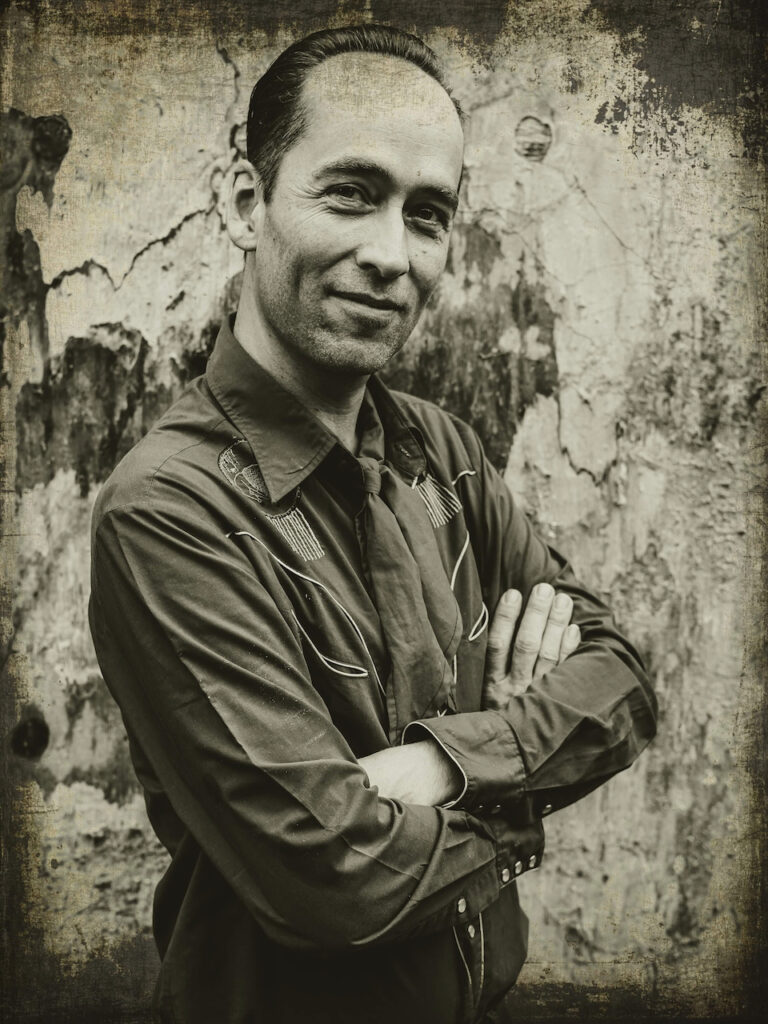
Steven Hollanders
Guitar / Lead Vocal

Kris Laukens
Fiddle / Backing Vocal
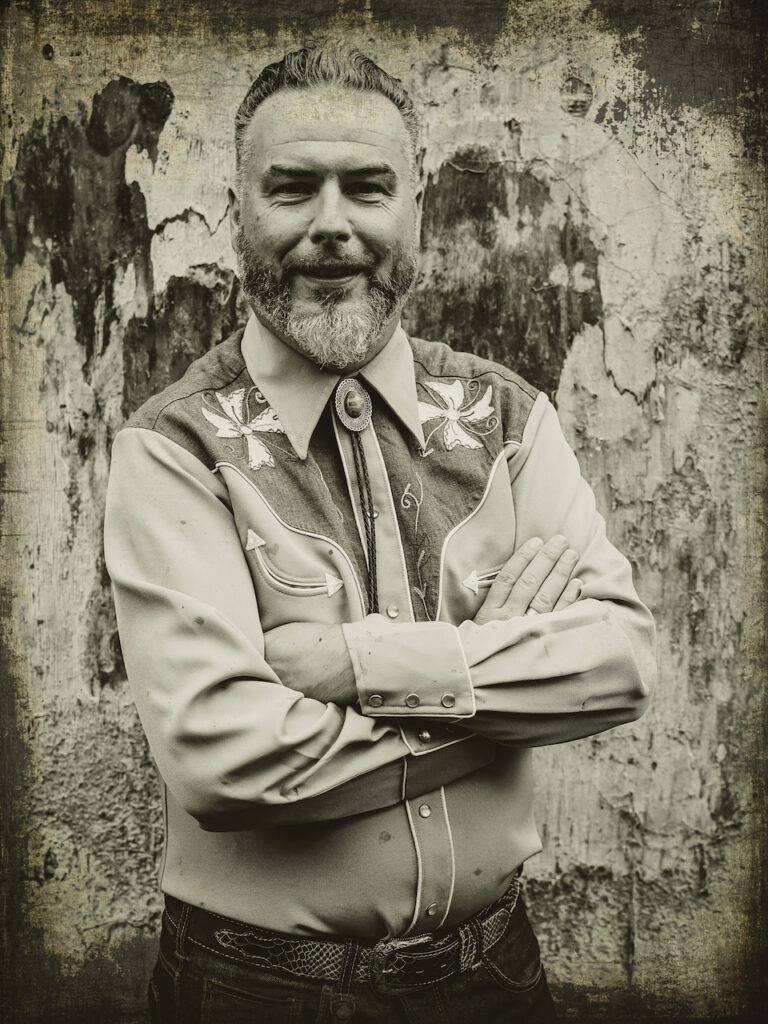
Jurgen De Wilde
Guitar / Banjo / Steel Guitar / Backing Vocal

Kurt Lens
Upright Bass / Backing Vocal